Slavery, Chiefs and a Trucker's Mistake
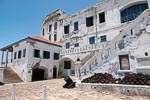
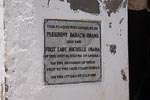
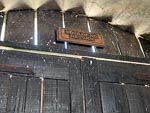
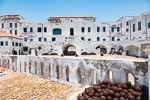
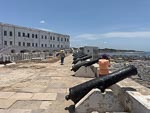
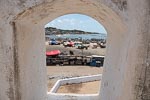
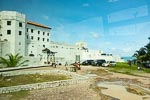
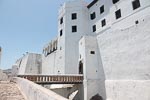
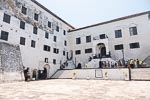
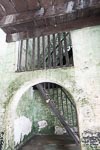
Our excursion today was a long bus ride east (from the port in Sekondi-Takorada) along the coast to the towns/cities of Cape Coast and Elmina where we visited in turn Cape Coast Castle and Elmina Castle. These two structures were built by European colonial powers as part of their search for riches on the African coast and eventually became essential facilities supporting the Atlantic slave trade. At both of these places we were able to see where slaves were kept before being shipped to the New World and at Cape Coast Castle we saw one of the original Gate of No Return.
While researching for this entry I found the following wikipedia entry, Slavery in Africa, which I felt gave a short but helpful historical perspective. Slavery it seems has been part of the culture of Africa and other parts of the world for a long time, but the Atlantic Trade took it to a whole new "industrial" level where humans beings became commodities.
One of the surprising facts about Ghana we learned today is that the Traditional Chiefs still play an important role in the day to day running of the country and the lives of average people. For example the chiefs technically own all the land, and are responsible (or at least in the minds of the people are effectively responsible) for settling disputes. I have included the following wikipedia links on this topic, Chiefs in Ghana, Traditional Chiefs.
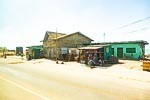
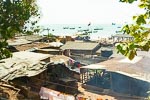
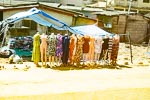
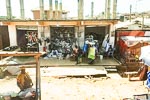
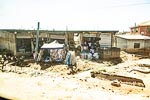
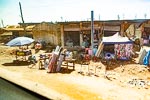
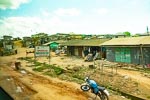
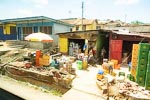
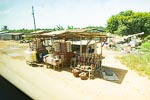
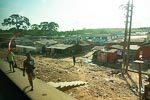
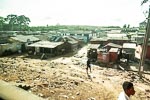
On our drive today we saw what looked like a high level of poverty and decay in the villages we passed through and the very poor conditions of the roads we travelled over. This seemed surprising given that Ghana is the 6th ranked gold producer in the world. Here are some links on the economy and mining in Ghana. Ghana's Economy, Mining in Ghana, World's Top Gold Producers
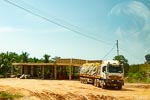

On a somewhat lighter note, look at the 7th photo in the top row of the photos above. It's a truck parked in front of a building under constructions. We noted this situation on our outwards drive but could only get the photo on the return journey. The truck was delivering building materials to the site but backed up too far and knocked out one of the concrete piers supporting the second floor. That second floor then sank onto the top of the trucks load and that is what is still holding up the second floor.